Jonathan Jackson, PhD
Cognitive neuroscientist, clinical trialist, author.
The ordinary machinery of science is not broken.
That is the problem.
Currently writing Science's Second Act: The Tower, the Garden, and Being Caught in the Middle.
-
Science in the Shape of People.
On community-governed data trusts as an alternative architecture for American science.
Forthcoming -
Science Didn't Break. It Was Built to Break.
On structural failure as a feature of health science methodology.
-
You Cannot Fire Ground Truth.
On what governance can and cannot reach when it tries to fire distributed expertise.
-
Too Much Time in the Community.
On the impossible expectation that scientists be both rigorous specialists and rooted neighbors.
Bylines and essays.
Recent work in reverse chronological order. Selected research writing follows.
-
Science in the Shape of People.
On community-governed data trusts as an alternative architecture for American science.
Forthcoming -
Science Didn't Break. It Was Built to Break.
On structural failure as a feature of health science methodology.
-
Modifiable barriers for recruitment and retention of older adults from underrepresented minorities in Alzheimer's research.
On the structural design features of clinical trials that determine who gets recruited, who stays, and what the resulting science can see.
Senior author · with Indorewalla, O'Connor, Budson & Guess DiTerlizzi -
Achieving health equity in embedded pragmatic trials for people living with dementia and their family caregivers.
On building representativeness into the IMPACT Collaboratory's pragmatic trial infrastructure as a structural feature, not an afterthought.
With Quiñones, Mitchell, Aranda, Dilworth-Anderson, McCarthy & Hinton -
Age-related changes in attentional selection: Quality of task set or degradation of task set across time?
On the structure of attentional selection in healthy aging, using distributional reaction-time methods.
With Balota -
White matter integrity and reaction time intraindividual variability in healthy aging and early-stage Alzheimer disease.
On white matter integrity and the slow-tail signal of early Alzheimer's, using ex-Gaussian distributional methods.
With Balota, Duchek & Head -
Mind-wandering in younger and older adults: Converging evidence from the sustained attention to response task and reading for comprehension.
On age-related differences in task-unrelated thought, motivation, and the structure of attention.
With Balota
Science's Second Act
The Tower, the Garden, and Being Caught in the Middle.
Part memoir, part structural argument. Science's Second Act tells the story of a scientist who scaled the institutions of academic medicine — from a neurology department to a cancer center to national research policy — and discovered that each promotion had moved him further from the communities whose health he was trying to improve. The rooms got grander and sparser. He was locked in until he was alone atop the tower.
The book introduces a portable framework — tower, garden, wild type, ground truth, and error term — for understanding why the machinery of health science erases the variation it most needs to see. The tower is beautiful: vertical, singular, closed, full of real knowledge and the wrong shape for most of what we need to know. The garden is the part of science the tower abandoned — horizontal, distributed, open, tended by whoever shows up, and producing knowledge rooted in the soil it grew in.
Science's Second Act is about the garden we forgot to plant, and about the people already planting it.
In the tradition of Ed Yong, Stuart Ritchie, Siddhartha Mukherjee, and Robert Sapolsky.
-
Forthcoming.
Manuscript in development. Representation and publication details will appear here when finalized.
The CARE Research Center.
Methodological work on who clinical research can see, and who it can't.
The Community Access, Recruitment, and Engagement (CARE) Research Center at Massachusetts General Hospital was the first community-governed clinical research infrastructure in MGH's history, founded in 2017. CARE works on the methodological problems that conventional clinical trial machinery treats as noise: who gets recruited, who stays, what counts as the sample, and whether the data being generated is the data the science actually needs.
-
Modifiable barriers for recruitment and retention of older adults from underrepresented minorities in Alzheimer's research.
On the structural design features of clinical trials that determine who gets recruited, who stays, and what the resulting science can see.
Senior author · with Indorewalla, O'Connor, Budson & Guess DiTerlizzi -
Achieving health equity in embedded pragmatic trials for people living with dementia and their family caregivers.
On building representativeness into the IMPACT Collaboratory's embedded pragmatic trial infrastructure as a structural feature, not an afterthought.
With Quiñones, Mitchell, Aranda, Dilworth-Anderson, McCarthy & Hinton -
Age-related changes in attentional selection: Quality of task set or degradation of task set across time?
On the structure of attentional selection in healthy aging, using distributional reaction-time methods.
With Balota -
White matter integrity and reaction time intraindividual variability in healthy aging and early-stage Alzheimer disease.
On white matter integrity and the slow-tail signal of early Alzheimer's, using ex-Gaussian distributional methods.
With Balota, Duchek & Head -
Mind-wandering in younger and older adults: Converging evidence from the sustained attention to response task and reading for comprehension.
On age-related differences in task-unrelated thought, motivation, and the structure of attention.
With Balota
Speaking.
Topics offered, selected venues, booking.
350+ invited lectures and keynotes.
-
What science actually is.
The practice, the institution, and the architecture we mistook for the whole field. A working scientist's account of what gets called science, what gets called noise, and the seam between the two.
-
What clinical research actually does.
The design features of clinical trials that determine what the resulting science can see, what it erases, and what it calls noise. Built from fifteen years of methodological work — from PRECIS-2 to floating catchment area models.
-
Local science as the alternative architecture.
What community-governed research already does that the tower can't, and what it would take to scale. Drawn from the manuscript in development and from a decade of building infrastructure inside Massachusetts General Hospital.
-
The state of neuroscience clinical research.
Anti-amyloid drugs, the Texas Sharpshooter Fallacy, and the questions the field keeps not asking. A direct read on what the last decade of trial outcomes is telling the rest of us.
-
Trial designs that don't erase the populations they study.
A practical workshop on the methodological choices that determine representativeness as a structural feature, not an afterthought. For investigators, statisticians, and program officers.
-
The architecture of trustworthy science.
Plenary remarks at the United Nations General Assembly side meeting on global health research governance.
-
Reinvigorating Clinical Trials,
with Amy Abernethy and Alexis Madrigal.
-
Diverse clinical trials: why aren't we there yet?
Live conversation on the systemic failures behind clinical trial composition.
-
The pool is big enough for all of us: representativeness in epidemiologic research.
SERious EPI podcast keynote conversation.
-
Health equity as foundational to the design of pragmatic trials.
Method-forward seminar on the PRECIS-2 framework in pragmatic trial design.
Notes from the garden.
Ongoing essays at @midbrain on Substack — what doesn't fit a manuscript or a byline.
Notes lives on Substack — at @midbrain, where I write about what doesn't fit a manuscript or a byline. The full archive is there; recent posts appear below.
-
You Cannot Fire Ground Truth.
On what governance can and cannot reach when it tries to fire distributed expertise.
-
Too Much Time in the Community.
On the impossible expectation that scientists be both rigorous specialists and rooted neighbors.
-
The Speedrun.
Dispatches on community science, the structure of health research, and the science of middle sizes.
Subscribe for occasional dispatches.
Biweekly. Community science, structural critique, the science of middle sizes.
About.
A working scientist who writes, currently writing the book.
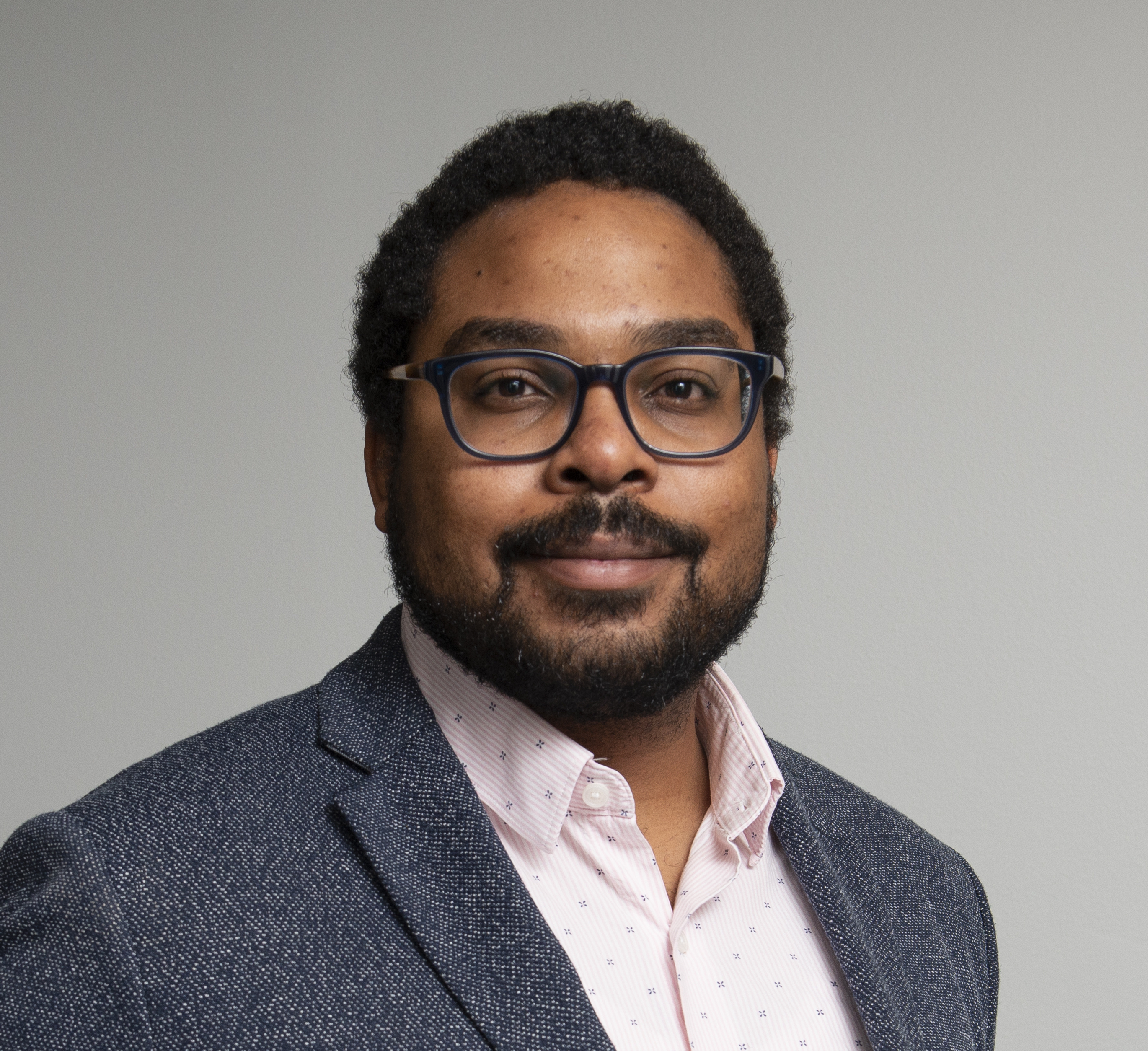
Jonathan Jackson is a cognitive neuroscientist and clinical trialist based in Boston. He founded the CARE Research Center at Massachusetts General Hospital — the first center of its kind in MGH's history, established at the rank of instructor — and won the NIH Director's Pioneer Award in 2020 for work the conventional mechanisms couldn't see. The trajectory his mentors had laid out, executed faster than they expected.
The trouble was that each promotion moved him further from the communities the work was supposed to serve. The rooms got grander and sparser. The methodology that had won him grants was the same methodology erasing the variation his science needed to see. The career wasn't going wrong. The career was working. That was the problem.
He's now writing about what he found, what he thinks comes next, and the alternative architecture already running in the territory the tower fenced off.
Press kit.
Bios at three lengths, a press portrait, and the right address.
Jonathan Jackson, PhD is a cognitive neuroscientist and clinical trialist. He founded the CARE Research Center at Massachusetts General Hospital in 2017 — the first community-governed research infrastructure in MGH's history — and received the NIH Director's Pioneer Award in 2020. He has delivered more than 350 invited lectures, including keynotes at the United Nations and Aspen Ideas. He is the author of the forthcoming Science's Second Act: The Tower, the Garden, and Being Caught in the Middle.
Jonathan Jackson, PhD is a cognitive neuroscientist, clinical trialist, and author. He founded the CARE Research Center at Massachusetts General Hospital in 2017 — the first community-governed research infrastructure in MGH's history, established at the rank of instructor when most directors are full professors with decades of grants behind them. In 2020 he received the NIH Director's Pioneer Award.
His methodological work spans cognitive aging, clinical trial design, and the structural conditions that determine which populations the resulting science can see. He has delivered more than 350 invited lectures and keynotes, including the United Nations General Assembly, the Aspen Ideas Festival, STAT News live events, and the National Institutes of Health.
In May 2026, STAT's First Opinion section published Science Didn't Break. It Was Built to Break. He is the author of the forthcoming Science's Second Act: The Tower, the Garden, and Being Caught in the Middle — part memoir, part structural argument about the architecture of health research.
Jonathan Jackson, PhD is a cognitive neuroscientist, clinical trialist, and author. He founded the CARE (Community Access, Recruitment, and Engagement) Research Center at Massachusetts General Hospital in 2017 — the first community-governed research infrastructure in MGH's history, established at the rank of instructor when most center directors are full professors with decades of grants behind them. He served on the faculty of Harvard Medical School.
In 2020 he received the NIH Director's Pioneer Award, given each year to a small number of investigators for work the conventional grant mechanisms are not designed to recognize. His methodological work spans cognitive aging, clinical trial design, and the structural conditions that determine which populations the resulting science can see. His peer-reviewed papers appear in Psychology and Aging, Neuropsychologia, the Journal of Alzheimer's Disease, and the Journal of the American Geriatrics Society, and his ongoing essays appear at @midbrain on Substack. In May 2026, STAT's First Opinion section published his essay Science Didn't Break. It Was Built to Break.
He has delivered more than 350 invited lectures and keynotes — including the United Nations General Assembly, the Aspen Ideas Festival, STAT News live events, the National Institutes of Health, the NIA IMPACT Collaboratory, and the Society for Epidemiologic Research — speaking on the architecture of trustworthy clinical research, the methodological causes of the replication crisis, and what community-governed alternatives already do that conventional infrastructure cannot.
He is the author of the forthcoming Science's Second Act: The Tower, the Garden, and Being Caught in the Middle. The book introduces a portable framework — tower, garden, wild type, ground truth, and error term — for understanding why the ordinary machinery of science erases the variation it most needs to see, and what the alternative architecture already running in the territory it fenced off looks like.
- Science Didn't Break. It Was Built to Break. Read at STAT →
- Press portrait Download →
- Bios — all three lengths Download →
Press inquiries: press@jonathanjacksonphd.com
Get in touch.
Plain email. The right address gets you to the right place.
-
Speaking
-
Press
-
General
Literary representation: [forthcoming].